
Custom Sublimation T-Shirt Manufacturing
Fabrion is a factory-direct Custom Sublimation T-Shirts manufacturer based in Thailand, producing custom sublimation t-shirts for brands, teams, clubs, gyms, event organizers, businesses, and private label orders.
Manufacturing scope and product overview
Custom Sublimation T-Shirts are short sleeve performance shirts produced with full-color sublimation printing for sportswear, teamwear, gym apparel, events, and branded business use. This product is made for buyers that need repeatable garment production, clear artwork placement, and consistent sizing across bulk orders.
Manufacturing focuses on cut-and-sew sublimation rather than basic decoration on finished blank shirts. Artwork is planned around the garment pattern, so the final product can support full-panel graphics, team designs, sponsor placement, and repeat production with controlled visual consistency.
Materials and fabric options
Custom sublimation T-shirts are manufactured from polyester-based performance fabrics because sublimation dye bonds with polyester during heat transfer. Common options include interlock polyester, microfiber polyester, birdseye mesh, mini mesh, and polyester-spandex blends when stretch is required.
Most production uses fabrics in the 140 to 180 GSM range. Lighter fabrics are used for running, training, and warm-weather wear, while mid-weight fabrics provide more structure for teamwear, gym apparel, and frequent washing.
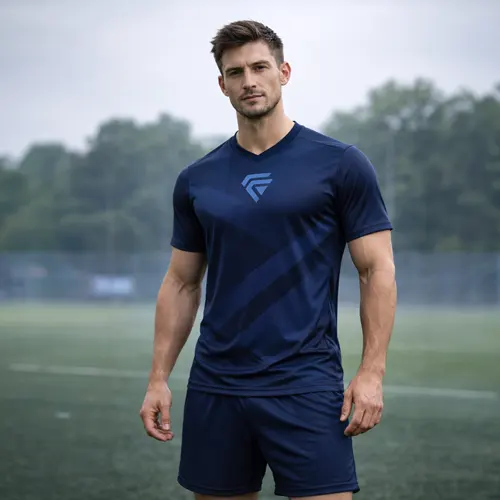
Fabric choice should balance print clarity, breathability, opacity, hand feel, and the expected use of the garment.
Branding and private labeling
Custom sublimation T-shirts allow artwork, logos, sponsor marks, names, numbers, and graphic elements to be printed directly into the garment panels. This keeps the decoration smooth, flexible, and integrated with the fabric instead of adding a raised print layer after sewing.
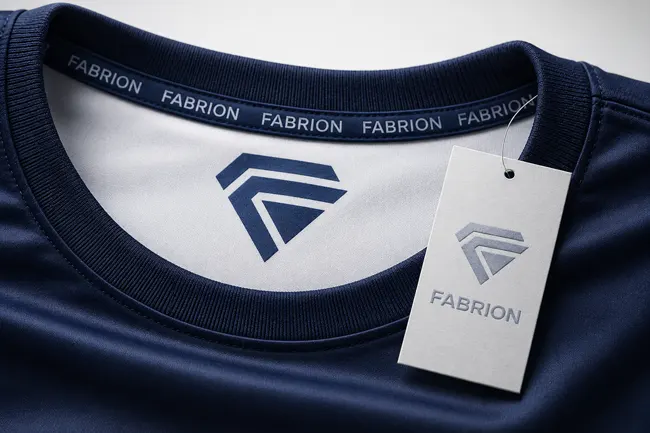
Private label options can include printed neck labels, heat-transfer size labels, woven labels, hangtags, barcode stickers, individual polybags, and custom-designed packaging. Label and branding details are reviewed during sampling so placement, sizing, and visibility can be approved before bulk production.
Garment construction, fit, and technical details
Custom sublimation T-shirts are usually produced through panel-based cut-and-sew manufacturing. The fabric panels are printed first, then cut and sewn into the final garment. This allows artwork to be positioned around the front, back, sleeves, shoulders, and side seams with better control than printing on finished blank shirts.
Construction commonly uses overlock seams for assembly and coverstitch finishing for hems and sleeve openings. Fit options may include regular, athletic, slim, or relaxed cuts depending on the buyer’s size standard. Grading is controlled across the size range so measurements remain consistent while the artwork proportions stay balanced from smaller to larger sizes.
Available fabric treatments
Available fabric treatments can include moisture-wicking, quick-dry, UV-focused, anti-odor, and soft-hand finishing when suitable for the selected polyester fabric. These treatments are chosen based on the intended use of the T-shirt, such as gym training, outdoor sport, event wear, or repeated team use.
Treatment selection must be confirmed before bulk production because finishes can affect fabric hand feel, print behavior, color appearance, and washing performance. For sublimation work, print readiness and heat stability are more important than adding unnecessary treatments.
Sampling and MOQ
Sampling confirms the fabric, fit, measurements, artwork placement, color appearance, construction details, and private label requirements before bulk production begins. For sublimated T-shirts, sampling is especially important because print placement and panel alignment need to be checked on the actual garment shape.
For stock fabrics and stock colors, the standard MOQ is usually 50 pieces per design, per garment color. For example, one design on black shirts requires 50 pieces. If the same design is produced on both black and white shirts, the MOQ is typically 50 pieces for black and 50 pieces for white. Custom fabric development or special material requirements may affect MOQ.
Quality control
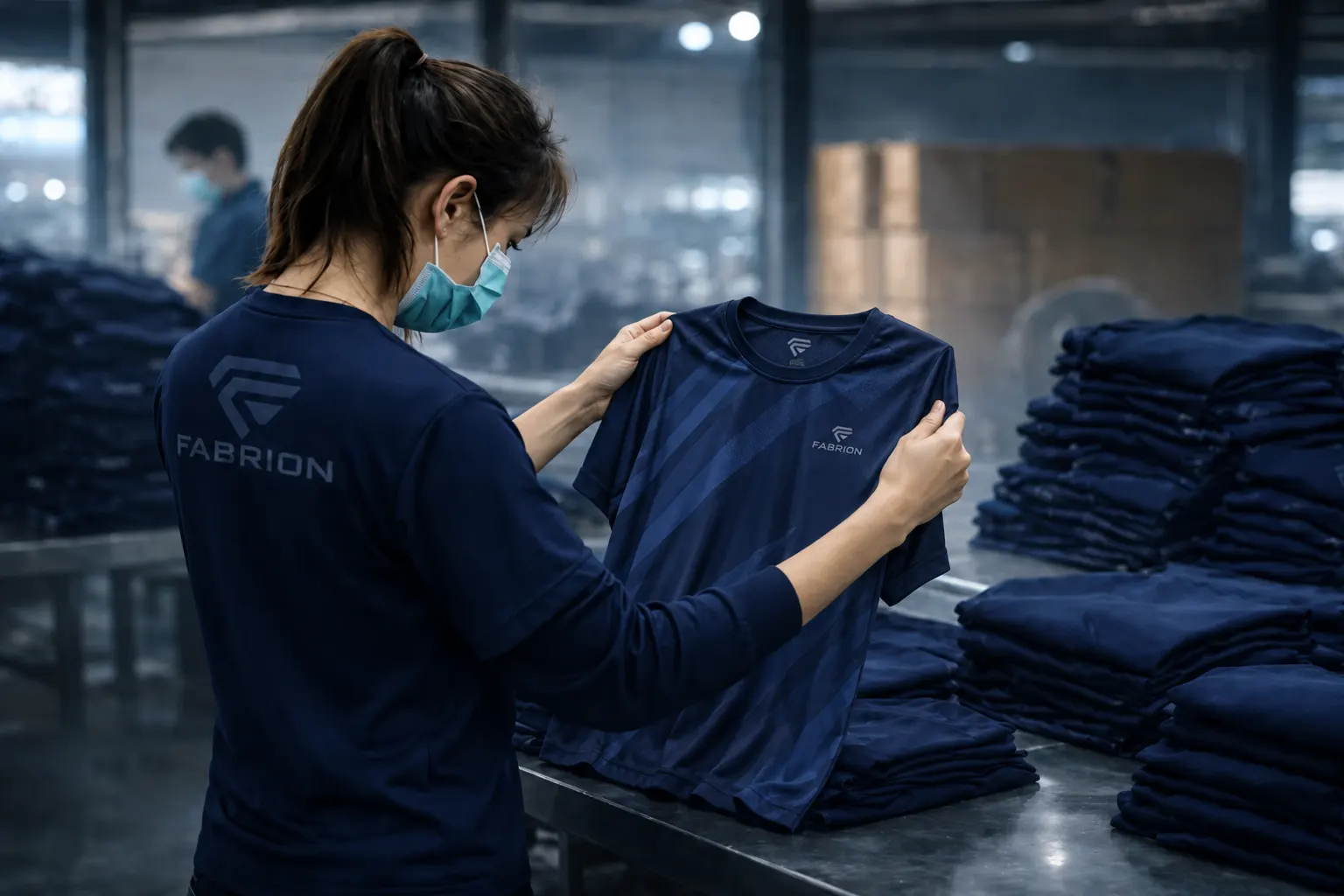
Quality control checks that bulk production follows the approved sample, artwork file, measurement sheet, and production specification. Main checkpoints include incoming fabric inspection, print color review, panel alignment, seam inspection, measurement checks, label placement, and final visual inspection before packing.
For sublimated T-shirts, consistency depends on stable fabric behavior, accurate panel matching, clean sewing, and controlled sizing across the order. Finished garments are checked against approved references so bulk production and future repeat orders remain aligned with the original specification.
Production workflow and communication
Production begins with a review of the artwork, quantity breakdown, size range, fabric requirements, labeling details, and any reference samples or technical documents provided by the buyer. Once the specifications are clear, Fabrion prepares the required production files, sample requirements, and approval steps before bulk manufacturing.
After approval, the same specifications are followed during production to reduce variation between samples, bulk orders, and future reorders. For repeat orders, previously approved measurements, artwork files, fabric choices, and branding details can be used as the reference for consistent production.
Production timelines
Production timing depends on fabric availability, sample approval, artwork complexity, order quantity, size range, labeling requirements, and current production scheduling. New developments usually require more time because the sample must be reviewed and approved before bulk production starts.
For standard production using approved samples, stock fabrics, and confirmed specifications, production is typically completed within 15 days after sample approval. Repeat orders are often faster to prepare because the measurements, artwork files, fabric choice, and branding details have already been approved.
Export packaging and logistics
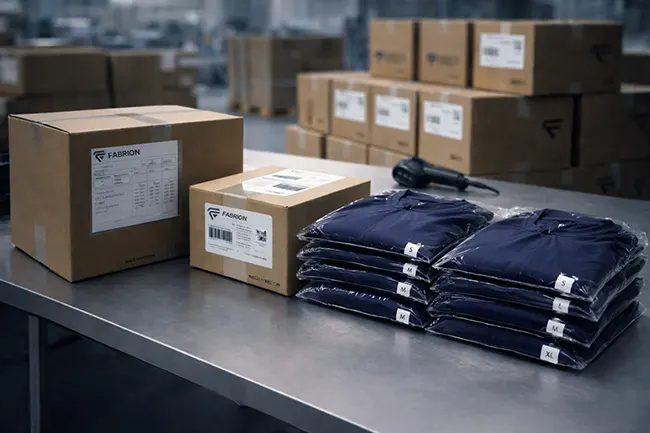
Finished sublimation shirts are packed according to the approved size breakdown, carton quantity, labeling requirements, and shipment method. Carton markings, size identification, purchase order references, and destination-specific details can be included to support receiving, inventory control, and onward distribution.
Custom-designed packaging can include individual polybags, barcode labels, size stickers, inserts, and branded packing components when required. Before dispatch, carton counts and packing accuracy are checked so the order is prepared for bulk shipment and export handling.
Custom Sublimation T-Shirts Manufacturing FAQ
Start Your Manufacturing Inquiry
To begin production planning, send your artwork, required quantities, size breakdown, fabric preference, branding requirements, and target delivery destination. Fabrion can review the specifications, confirm manufacturing suitability, and provide guidance for sampling and bulk production.