
Blank T-Shirts Manufacturing
Fabrion is a factory-direct blank T-shirt manufacturer based in Thailand, producing blank T-shirts for print shops, resellers, and private label orders.
Manufacturing scope and product overview
Blank T-shirts manufacturing focuses on producing consistent base garments for printing, resale, merch, and repeat bulk orders. The production process is based on controlled fabric selection, stable sizing, repeatable construction, and clean labeling options to support reliable reordering and later decoration. As a blank T-shirt manufacturer, Fabrion supports bulk production planned around fabric type, weight, fit standards, and labeling requirements.
Fabrion is a Thailand-based blank T-shirt factory producing blank short-sleeve and long-sleeve T-shirts for printing, private labeling, uniforms, and bulk distribution.
Materials and fabric options
Material selection affects hand feel, print performance, and durability. Cotton jersey is commonly used, especially combed or ring-spun cotton for a softer hand feel and smoother surface. Cotton-polyester blends are also widely used, with 80% cotton and 20% polyester being a common option for balancing cotton comfort with better shape retention and durability.
Fabric weight should be selected based on climate, target market, fit, and intended use. Lightweight T-shirts are commonly developed around 120 to 160 GSM, standard everyday styles around 160 to 190 GSM, and heavier weights from 200 GSM upward when more coverage, structure, and a heavier hand feel are required.

Finishing also affects the final result. Enzyme wash can reduce surface fuzz and create a softer hand feel, while stone wash or enzyme stone wash may be used for a more worn-in finish. Common T-shirt fabrics and standard weight ranges can usually be sourced more efficiently, while special requirements may require custom sourcing through our fabric mill networks.
Branding and private labeling
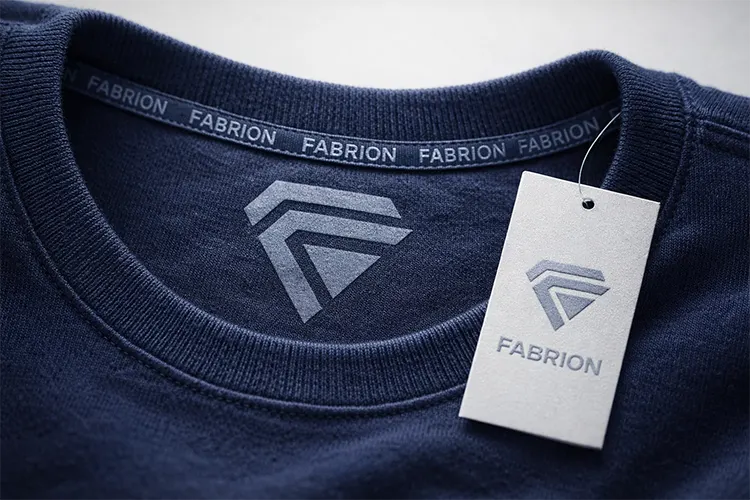
Although the garment is produced as a blank, branding and private labeling still play an important role in manufacturing. A blank T-shirt can be produced without front or back artwork while still including brand-specific neck labels, size labels, care labels, woven labels, hangtags, and custom packaging depending on the buyer’s requirements.
For private-label blank T-shirts, the goal is to keep the garment clean and consistent while allowing the buyer to control labeling, decoration, and final presentation. This is important for print shops and resellers that need a stable unbranded or custom-labeled base across multiple orders.
For buyers who require fully customized products instead of blank production, Fabrion also offers custom T-shirt manufacturing with custom fabrics, sizing, printing, embroidery, and private label development.
Garment construction, fit, and technical details
Blank T-shirt construction is usually kept clean and standardized so the garment performs as a reliable base for printing, finishing, and repeat bulk production. Depending on the style, production may include crew neck construction, rib neckbands, reinforced shoulders, straight hems, and either side-seam or tubular body construction based on the target fit and garment specification.
Fit stability is important in blank T-shirt manufacturing. Fixed size grading and regular measurement checks help reduce variation between batches, while shrinkage must be controlled during fabric preparation so the finished garment stays closer to approved specifications after printing and washing.
Blank T-shirts are commonly produced in both short-sleeve and long-sleeve versions. Long-sleeve blanks follow the same construction standards, with additional sleeve-related controls to maintain proportion and consistency.
Sampling and MOQ
Sampling and MOQ for blank T-shirt manufacturing depend on color range, fabric selection, size range, labeling requirements, and whether the buyer is developing a new blank specification or reordering an existing one. Sampling is typically used to confirm fabric hand feel, fit, measurements, shrinkage behavior, and construction details before bulk production begins.
For repeat orders, once the base specification is approved, production can follow the same fit, construction, and material standards across future runs. This is important for buyers who need continuity across print orders, uniforms, or core blank styles.
Quality control
Surface uniformity, measurement accuracy, seam execution, and batch consistency are key quality control points. Since blank T-shirts are often used as a print base, it must remain consistent before decoration is applied. Variations in surface texture, fabric behavior, or sizing can affect the final printed result and reduce reorder consistency.
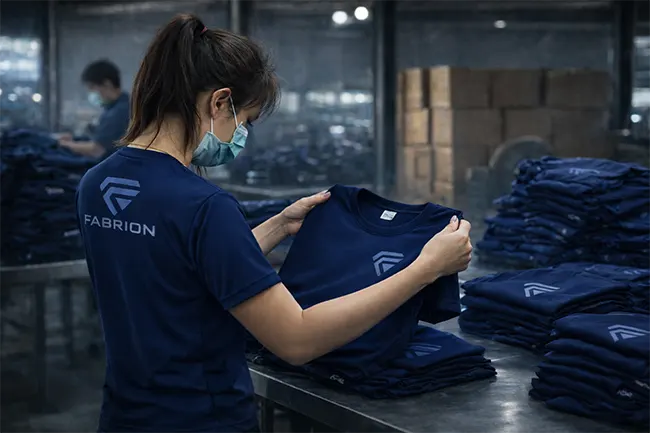
Quality checks are applied at fabric inspection, during cutting, during sewing, and at final inspection. These controls help maintain consistent measurements, sewing quality, and visual uniformity across the order, while supporting closer continuity between current and future runs.
Production workflow and communication
Blank T-shirt production should follow a clear workflow so approved specifications are documented and applied consistently. This usually starts with reviewing the blank style, fabric composition, target weight, size range, labeling requirements, and intended end use. Sampling and approval stages are then used to confirm the garment before bulk production begins.
When blank T-shirts are reordered for printing or stock replenishment, buyers need a clear reference point for approved measurements, fabric standards, and construction details. This helps reduce avoidable variation and supports more consistent repeat output.
Production timelines
Production timelines for blank T-shirt manufacturing depend on order quantity, fabric availability, development status, and whether the order is a first-time sample or a repeat run. New developments usually require time for material confirmation, pattern review, fit approval, and pre-production checks before bulk cutting and sewing begin.
Repeat orders are generally more straightforward once the blank specification has been approved and documented. In many cases, standard bulk orders can be completed in around 15 days after approval, depending on order quantity, material readiness, and production scheduling.
Export packaging and logistics
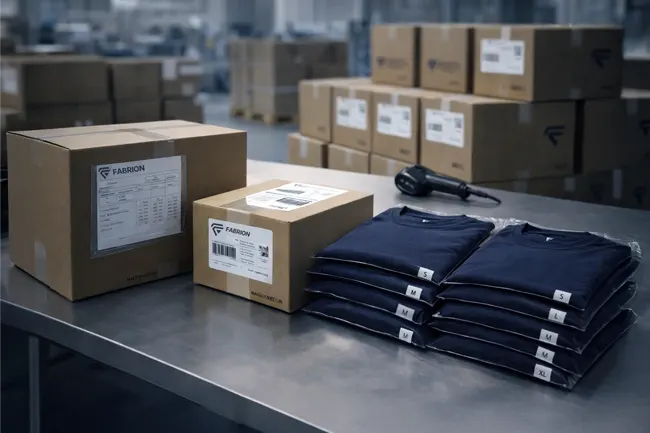
Packaging for blank T-shirts should be planned around bulk shipment requirements, product protection, labeling accuracy, and carton efficiency. Depending on the order, units may be packed by size, color, or ratio assortment, with folding and polybagging adjusted to the buyer’s requirements.
Packaging specifications may also include custom-designed packaging, barcode labels, carton markings, size stickers, or other requirements. The main objective is to ensure the finished order is packed accurately for dispatch and arrives ready for receiving, decoration, or distribution.
Blank T-Shirts Manufacturing FAQ
Start Your Manufacturing Inquiry
If you are sourcing blank T-shirts for private-label use, merch, uniforms, or repeat bulk orders, send your fabric preference, target fit, size range, estimated quantity, and branding or packaging requirements to begin production planning.