
Custom Cotton T-Shirt Manufacturing
Fabrion is a factory-direct Custom Cotton T-Shirts manufacturer based in Thailand, producing cotton t-shirts for brands, organizations, and private label orders.
Manufacturing scope and product overview
Custom cotton T-shirt manufacturing requires close control of fabric behavior throughout production. Cotton fabric can shrink, twist, and move during processing, so stable bulk output depends on how the material is handled before cutting, sewing, and finishing.
This page explains Fabrion’s production scope as a cotton T-shirt manufacturer in Thailand, with factory-based production for custom cotton T-shirts, including materials, construction, fit control, branding options, and quality control for bulk manufacturing. We manufacture for brands, print shops, gyms, teams, and organizations that need controlled shrinkage, stable sizing, and consistent repeat production.
Materials and fabric options
Cotton T-shirt production starts with selecting the right fabric for the target use. This includes yarn type, fabric weight, surface quality, softness, structure, and the required balance between comfort, durability, print performance, and target price level.
We manufacture cotton T-shirts using cotton, combed cotton, and organic cotton options. Combed cotton is generally selected for a smoother surface and softer hand feel, while regular cotton may suit more price-sensitive production. Organic cotton can be used when certified or sustainability-focused material is required.

Most cotton T-shirts are produced in single jersey knit fabric, which gives the garment its familiar soft feel and natural flexibility. Lighter cotton fabrics may suit promotional or warm-weather use, while midweight and heavier fabrics are better for products that need more structure, opacity, and a more substantial retail feel.
Branding and private labeling
Cotton T-shirts are suitable for screen printing, embroidery, heat transfer, and other decoration techniques. They can also be produced with private label features depending on the product specification and required finish.
For print shops and apparel brands, the garment must provide a stable production base, not just a blank shirt. Fabric surface quality, construction consistency, and measurement control all affect how the final branded product looks and performs.
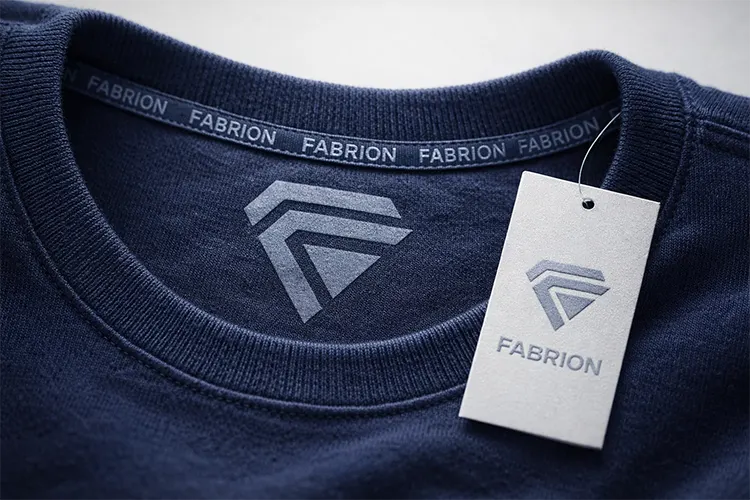
Private labeling options may include branded neck labels, size labels, care labels, hangtags, packaging customization, and other brand-specific finishing details.
Custom cotton T-shirts are part of Fabrion’s broader custom T-shirt manufacturing capabilities, including different fabric types, fits, printing methods, and private label production options.
Garment construction, fit, and technical details
Cotton T-shirt construction must support the approved fit, size stability, and required product standard. Shrinkage and dimensional stability are important because fabric instability during production can create size inconsistency, distortion, and mismatch between production batches.
Shrinkage control is managed through fabric stabilization before cutting, while sizing consistency depends on fixed patterns, controlled grading, cutting accuracy, and regular measurement checks during production. Depending on the product type, cotton T-shirts may be produced with side seams or tubular body construction.
Standard sewing quality includes clean neck construction, balanced shoulder assembly, correct sleeve setting, consistent hems, and reliable seam integrity. These details affect garment shape, durability, and repeat consistency in bulk production.
Sampling and MOQ
Samples are used to confirm fit, material selection, construction details, and branding requirements before bulk production begins. This helps align the approved product before factory-scale output starts and reduces avoidable changes later in production.
MOQ depends on fabric type, color requirements, branding method, and customization requirements. For standard cotton T-shirt production, our standard MOQ is 50 pieces per color per design. Customized products with special materials, trims, or packaging should be reviewed against the exact product specification.
Quality control
For cotton T-shirt manufacturing, the main quality control priorities are fabric stability, measurement accuracy, seam integrity, and visual consistency against approved specifications. Because cotton fabric can vary depending on yarn, knitting, dyeing, and finishing, these checks are especially important in bulk production.
Checks are carried out on incoming fabric, during cutting, during sewing, and at final inspection. This helps control variation before it becomes a bulk production issue. The objective is to maintain reliable output across first orders and repeat production, especially for brands and print shops that need consistency over time.
Production workflow and communication
Cotton T-shirt manufacturing works best when production is built around clear specifications and controlled approvals. The process starts with confirming the product scope, fabric selection, sizing requirements, branding method, target quantities, and delivery timeline.
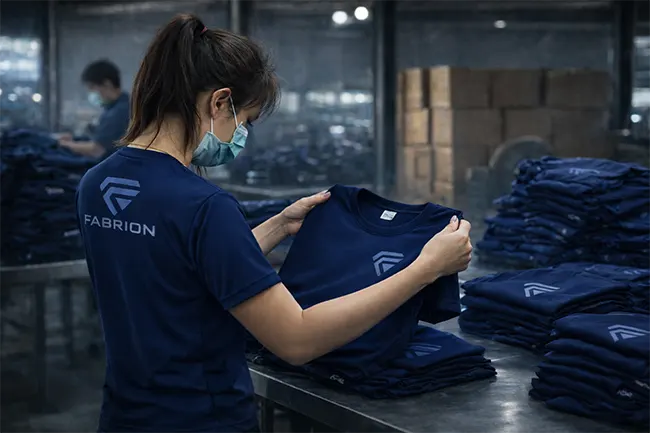
Once these details are confirmed, production moves through sampling, material approval, pattern control, cutting, sewing, branding, inspection, and packing. Communication is based on approved production details so that fit, construction, and branding standards stay consistent from sampling through bulk production.
Production timelines
Lead times depend on fabric availability, color requirements, branding method, sampling needs, and order volume. Standard cotton T-shirt orders are generally easier to schedule than products with custom materials, colors, or more complex branding requirements.
For standard cotton T-shirt production, bulk manufacturing typically starts after sample approval, with production time generally around 15 days depending on the final order specification. Sampling, material approval, production planning, manufacturing, quality control, and packing should all be considered when setting the final delivery schedule.
Export packaging and logistics
Export packaging for cotton T-shirt production should be planned according to packing requirements, shipment method, and destination market. This may include size breakdown packing, carton planning, labeling, barcode requirements, and other export packaging specifications.
For international orders, packaging should support shipment accuracy and efficient receiving at destination. Shipping method, destination, lead time, and carton standards should be confirmed as part of the production plan so the finished order is packed correctly for export.

Custom Cotton T-Shirt Manufacturing FAQ
Start Your Manufacturing Inquiry
Cotton T-shirt manufacturing inquiries should begin with clear production requirements, including product type, fabric selection, estimated quantities, branding method, sizing requirements, and delivery timeline. This helps confirm feasibility, align specifications, and prepare production planning correctly from the start.